
What Is Red Light Therapy?
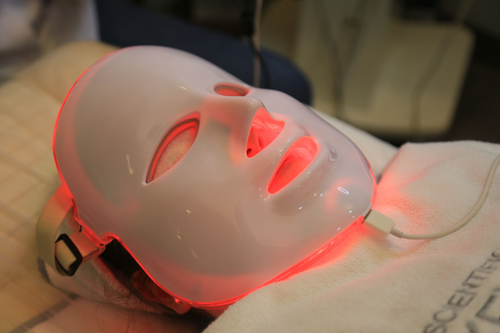
Red light therapy uses specific wavelengths of visible red and near-infrared light applied to the skin's surface. It has become a popular addition to skincare routines, recovery practices, and wellness programs, appearing in everything from handheld wands to full-body treatment systems.
Because it's available in so many formats, one of the most common questions consumers ask is whether an at-home device can deliver the same experience as a session performed with professional equipment in a clinic or med spa. The honest answer is that both formats have a place, but they are not interchangeable.
At-Home Red Light Devices: Convenience With Real Limits
At-home red light devices are designed for accessibility. They are typically compact, rechargeable units meant for one person to use in short sessions, often targeting a specific area like the face, eyes, or neck.
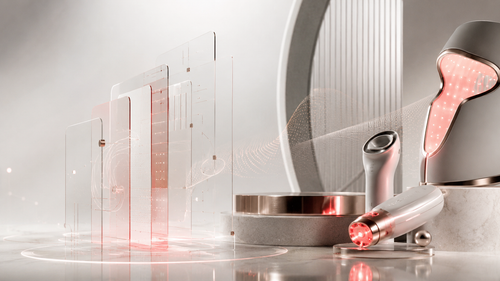
Devices such as Electra, ML-Star's targeted eye and facial-toning device, illustrate this category well. Electra combines red, blue, amber, and infrared light with EMS, microcurrent, and temperature control in a compact handheld format designed for personal use at home. It's built to fit into a regular skincare routine rather than to replace an in-clinic protocol.
The convenience of at-home devices comes with trade-offs:
- Smaller treatment areas mean sessions typically cover one facial zone or region at a time, not the full body.
- Lower output and fewer light sources compared to professional-grade systems, since consumer devices are engineered for safe, unsupervised personal use.
- A limited number of preset modes rather than fully customizable wavelength programs.
- No professional oversight, so users rely on their own judgment for session frequency and technique.
None of this makes at-home devices ineffective for their intended purpose. It simply means they're designed to serve a different role than the equipment used in professional settings.
What Sets Professional-Grade Systems Apart
Professional red light therapy systems are built around a different set of priorities: coverage, output, and flexibility for a trained operator managing sessions for multiple clients.
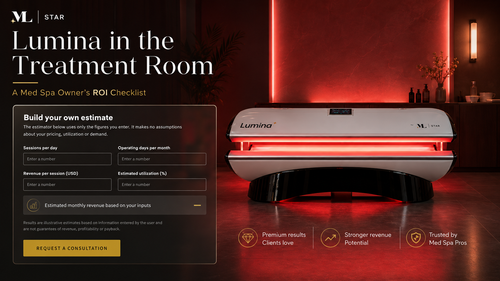
Lumina, ML-Star's full-body light therapy platform used in clinics, med spas, recovery studios, and fitness facilities, is a useful reference point for understanding this category. It is engineered with 21,600 high-performance LEDs and five selectable wavelengths, including blue, yellow, red, near-infrared, and deep near-infrared light, delivered from an enclosed dual-cabin design that surrounds the body with light from above and below. Operators select predefined programs or customize wavelength combinations and session duration through an integrated touchscreen, adapting each session to the client in front of them.
This kind of architecture isn't something a handheld consumer device is designed to replicate. Full-body coverage, higher-output arrays, and multi-wavelength customization are engineering choices suited to a professional environment, where a trained operator oversees the session and integrates it into a broader protocol.
The same principle shows up in professional facial devices. Antares, for example, brings together seven complementary technologies, including red and blue LED light, infrared light, radiofrequency, EMS, ionic technology, and cooling, into six structured modes designed to be guided by a professional through a facial-care sequence. That level of technology integration and guided sequencing is built for a clinical setting rather than a bathroom counter.
Why the Setting Matters as Much as the Device
The gap between at-home and professional red light therapy isn't only about hardware. It's also about the experience surrounding the session.
In a clinic or med spa, a trained operator can:
- Select wavelengths and program combinations suited to the specific goal of the visit.
- Adjust session parameters as needed over the course of a treatment plan.
- Combine light therapy with complementary treatments as part of a broader, structured routine.
- Maintain consistent equipment performance through professional-grade upkeep.
At home, the user is both the operator and the client, working with a device that's intentionally simplified for safety and ease of use. That simplicity is a strength for personal upkeep between visits, but it's also the reason at-home devices aren't positioned as a substitute for professional-grade systems.
What Actually Works: The Verdict
For everyday personal upkeep between visits, at-home red light devices offer real convenience and can be a reasonable part of a skincare routine. But for consumers looking for the fuller experience that comes with higher-output, multi-wavelength, full-body, or clinically guided treatment, the way these systems are engineered points clearly toward professional-grade devices used in a clinic or med spa setting.
The difference isn't just marketing language. It comes down to coverage area, number of light sources, wavelength flexibility, and the presence of a trained operator managing the session, all of which are built into professional platforms like Lumina and Antares in ways that compact consumer devices simply aren't designed to replicate.
For Clinics and Med Spas: Bring Professional-Grade Light Therapy to Your Practice
If you operate a clinic, med spa, recovery studio, or wellness facility and are evaluating professional red light therapy equipment for your treatment menu, explore ML-Star's professional platforms, including Lumina for full-body light therapy and Antares for professional facial-care protocols. Contact ML-Star to discuss how a professional-grade system can fit into your practice's service offering and client experience.