
When evaluating a professional beauty, wellness or light-based device, you may encounter several FDA-related expressions:
- FDA registered
- FDA listed
- Class I
- Class II
- 510(k)-exempt
- FDA cleared
- FDA approved
These terms are sometimes used as though they mean the same thing. They do not.
A device may be classified as Class I and exempt from the 510(k) premarket-notification requirement. Another device may be Class II and also 510(k)-exempt. A different Class II device may require a 510(k) submission and receive FDA clearance.
That is why regulatory statements must be connected to the specific device, intended use, applicable product category, labeling and claims.
At ML-Star, regulatory status is reviewed product by product. We do not assume that one classification applies automatically to every device in our portfolio.
The most important distinction
Understanding the FDA framework begins with separating two questions.
What class is the device?
The FDA classifies medical devices into Class I, Class II and Class III. Classification is based partly on risk and on the level of regulatory control considered necessary to provide reasonable assurance of safety and effectiveness.
All three classes are subject to general controls. Class II devices may also be subject to special controls, while Class III devices generally require the highest level of premarket review.
Does the device require a 510(k)?
A 510(k) is a type of premarket submission. It is generally used to demonstrate that a device is substantially equivalent to a legally marketed predicate device.
However, certain Class I and Class II device categories are exempt from the 510(k) requirement. The FDA states that most Class I and some Class II devices are 510(k)-exempt, subject to applicable limitations.
Therefore:
Device class and 510(k) status describe two different aspects of the regulatory framework.
A Class II device is not automatically required to obtain an individual 510(k) clearance, and the term 510(k)-exempt does not automatically mean Class I.
What is an FDA Class I device?
Class I generally includes device categories subject primarily to the FDA’s general controls.
Depending on the applicable device category, these requirements may include:
- establishment registration;
- device listing;
- appropriate labeling;
- recordkeeping;
- complaint handling;
- reporting obligations;
- corrections and removals;
- and rules against adulterated or misbranded devices.
Class I does not mean that a device is unregulated. It means that the device belongs to a category for which general controls are generally considered the appropriate regulatory level.
Many Class I categories are exempt from submitting a 510(k), but the exemption and its limitations must still be verified for the exact product category.
What is an FDA Class II device?
Class II devices are subject to general controls and may also be subject to special controls.
Special controls can include requirements related to:
- device performance;
- technical testing;
- labeling;
- safety characteristics;
- postmarket surveillance;
- or other category-specific requirements.
Many Class II devices require a 510(k), but some Class II categories are specifically exempt.
This is an important distinction because the expressions Class II and 510(k)-exempt can correctly apply to the same device.
The FDA product classification database, for example, identifies the infrared therapeutic heating lamp category under product code ILY as:
- Class II;
- 510(k)-exempt;
- subject to the applicable limitations of the exemption;
- and not exempt from applicable quality-system requirements. FDA DB
What is a 510(k)?
A 510(k) is a premarket notification submitted to the FDA.
Through this process, the submitter generally demonstrates that the device is substantially equivalent to a legally marketed predicate device.
The FDA evaluates factors such as:
- intended use;
- technological characteristics;
- performance;
- safety;
- and whether any differences raise new questions of safety or effectiveness.
When the FDA makes a substantial-equivalence determination, the device is commonly described as FDA cleared through the 510(k) process.
This is different from FDA approval. “Approved” is generally associated with other regulatory pathways, including Premarket Approval for many Class III devices.
What does 510(k)-exempt mean?
A 510(k)-exempt device category does not normally require an individual 510(k) premarket submission before marketing.
The exemption exists because the FDA has determined that a 510(k) is not necessary to provide reasonable assurance of safety and effectiveness for devices that remain within the defined category and applicable limitations.
However:
510(k)-exempt does not mean exempt from FDA regulation.
Depending on the product and the parties involved, obligations may still apply to:
- establishment registration;
- device listing;
- labeling;
- quality systems;
- complaint files;
- adverse-event reporting;
- importation;
- recordkeeping;
- corrections and removals.
A 510(k) exemption also does not give a company permission to make unlimited medical or therapeutic claims.
The device must remain within the applicable category, intended use and limitations of the exemption.
Can both Class I and Class II devices be 510(k)-exempt?
Yes.
This is one of the most important points to understand.
A Class I therapeutic electric massager category under FDA product code ISA is identified as:
- Class I;
- 510(k)-exempt;
- subject to general controls;
- and subject to the limitations of the exemption.
An infrared therapeutic heating lamp category under FDA product code ILY is identified as:
- Class II;
- 510(k)-exempt;
- subject to the applicable Class II requirements and exemption limitations.
Therefore, the following two statements can both be accurate:
Class I, 510(k)-exempt
and:
Class II, 510(k)-exempt
There is no contradiction. The class describes the regulatory category, while the exemption describes whether an individual 510(k) premarket notification is normally required.
What does “where applicable” mean?
The words where applicable are essential because FDA status is device-specific.
A regulatory classification does not automatically apply to:
- every product sold by a brand;
- every device using LEDs;
- every red-light device;
- every infrared product;
- every facial device;
- or every device manufactured in the same facility.
The applicable category depends on factors such as:
- The device’s intended functionality;
- Its technology and operating characteristics;
- Its intended use;
- Its indications for use;
- Its labeling and instructions;
- Its marketing and sales claims;
- The applicable FDA product category;
- Whether the device remains within the limitations of an exemption.
The FDA notes that device classification is connected to intended use and indications for use—not simply to what the product looks like or the technology it contains.
A statement such as:
FDA Class I or Class II, 510(k)-exempt where applicable
therefore means:
The exact classification and premarket status vary by product and apply only where supported by the product-specific regulatory documentation.
How this applies to ML-Star devices
ML-Star maintains product-specific regulatory documentation rather than applying one universal classification to its complete portfolio.
Based on ML-Star’s current documentation:
| ML-Star device | Current documented classification | Premarket status |
|---|---|---|
| Lumina | Class II | 510(k)-exempt |
| Antares | Class I | 510(k)-exempt |
| Electra | Class I | 510(k)-exempt |
| Juno | Class II | 510(k)-cleared (model KFB291, K241857) |
| Maia | No FDA classification claimed | No FDA premarket claim |
This table illustrates why class and premarket status must be considered separately.
Lumina is documented within a Class II, 510(k)-exempt category. Antares and Electra are documented within a Class I, 510(k)-exempt category. Juno takes a different route again: it is a Class II device whose premarket status rests on a 510(k) clearance rather than on an exemption.
Maia appears in the table for completeness only. ML-Star currently makes no FDA classification, clearance, approval or 510(k)-exempt claim for Maia. No product code, device class or premarket status is assigned to it.
The same status should not automatically be extended to another ML-Star device until its product-specific regulatory review and documentation have been completed.
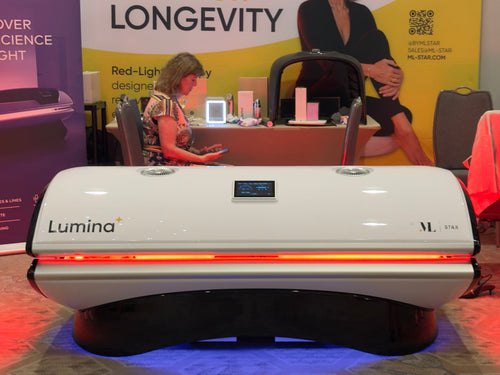
ML-Star Lumina: Class II, 510(k)-exempt
Lumina is documented within an FDA Class II device category that is exempt from the individual 510(k) premarket-notification requirement.
The applicable category relates to infrared energy used to provide topical heating, identified under FDA product code ILY.
The relevant FDA category is classified as Class II and 510(k)-exempt under 21 CFR 890.5500.
The correct public statement is:
ML-Star Lumina is documented as a Class II, 510(k)-exempt device under the applicable FDA category.
This does not mean:
- FDA approved;
- FDA certified;
- individually cleared through a 510(k);
- or endorsed by the FDA.
Because the applicable category is 510(k)-exempt, an individual substantial-equivalence submission is not normally required, provided the device remains within the category and limitations of the exemption.
ML-Star Antares: Class I, 510(k)-exempt
Antares is documented within a Class I device category that is exempt from the individual 510(k) premarket-notification requirement. The applicable category is identified under FDA product code ISA.
ML-Star maintains product-specific documentation connecting Antares to the applicable device category without material changes to its technical specifications, intended functionality, performance or core components.
The correct public statement is:
ML-Star Antares is documented as a Class I, 510(k)-exempt device under the applicable FDA category.
The Class I designation means that the category is primarily subject to general controls.
The 510(k)-exempt designation means that an individual 510(k) submission is not normally required when the product remains within the applicable category and limitations.
ML-Star Electra: Class I, 510(k)-exempt
Electra is also documented within a Class I, 510(k)-exempt device category, identified under FDA product code ISA.
As with Antares, ML-Star maintains product-specific documentation supporting the connection between the branded device and its applicable regulatory category.
The correct public statement is:
ML-Star Electra is documented as a Class I, 510(k)-exempt device under the applicable FDA category.
This does not mean that Electra has received an individual 510(k) clearance. A product marketed within a valid exempt category does not normally receive a separate substantial-equivalence order.
ML-Star Juno: Class II, cleared through 510(k) K241857
Juno is the one ML-Star device whose premarket status comes from a clearance rather than from an exemption. The precise statement is:
Juno model KFB291 is included in FDA 510(k) K241857 and is classified as Class II.
Model KFB291 is expressly included in that 510(k). The status is therefore tied to an identified model, not inferred from a brand name, a product family or a resemblance to another device.
A 510(k) clearance reflects a substantial-equivalence determination. The FDA reviewed the submission and determined the device to be substantially equivalent to a legally marketed predicate device, for the indications for use stated in that submission.
Clearance is not premarket approval. A cleared device has not been through the Premarket Approval pathway, and a clearance is not an FDA approval, certification or endorsement.
Just as importantly, the statement above should not be read to mean that every feature, technology, operating mode, claimed benefit or ML-Star marketing statement was separately reviewed by the FDA. A 510(k) covers the device and the indications for use presented in the submission, and nothing wider.
This does not mean:
- FDA approved;
- FDA certified;
- FDA endorsed;
- reviewed or validated for every advertised benefit;
- or applicable to any other ML-Star device.
ML-Star Maia: no FDA regulatory claim
ML-Star currently makes no FDA classification, clearance, approval or 510(k)-exempt claim for Maia.
No FDA product code, device class or premarket status is assigned to Maia in ML-Star’s public materials.
Making no claim is the correct position where product-specific documentation has not been established. That silence is deliberate and should not be read as an implied status of any kind, whether exempt, cleared or approved.
Does FDA registration mean FDA approval?
No.
FDA establishment registration generally applies to owners or operators of establishments involved in producing or distributing medical devices. Device listing is a separate requirement concerning the devices associated with the establishment.
The FDA states explicitly that registration and listing do not denote approval, clearance or authorization of an establishment or its medical devices. The FDA also states that it does not issue medical-device registration certificates.
This means that the following expressions should not be treated as interchangeable:
| Expression | What it describes |
|---|---|
| Establishment registered | The applicable facility is registered with the FDA |
| Device listed | The device is included in the applicable listing system |
| Class I or Class II | The regulatory classification of the device category |
| 510(k)-exempt | An individual 510(k) is normally not required |
| FDA cleared | FDA issued a substantial-equivalence determination |
| FDA approved | FDA approved the device through an applicable approval pathway |
Registration alone does not demonstrate that the FDA has reviewed the individual device’s safety or effectiveness.
What these designations mean—and what they do not mean
Class I or Class II, 510(k)-exempt can mean:
- The applicable device category has been identified.
- The category has a defined FDA classification.
- The category is exempt from an individual 510(k) submission.
- General controls and other applicable requirements still apply.
- Product labeling and marketing must remain consistent with the applicable category.
- The exemption remains subject to regulatory limitations.
It does not mean:
- FDA approved;
- FDA certified;
- FDA endorsed;
- individually FDA cleared;
- exempt from all FDA requirements;
- proven effective for every advertised benefit;
- or permitted to make unrestricted medical claims.
What professional buyers should verify
When evaluating a beauty, wellness or light-based device, a general FDA-related statement should not be the end of the review.
The exact product
Documentation should relate to the exact branded device being purchased—not merely to another product in the same collection.
The device classification
The supporting documentation should identify whether the product is associated with a Class I, Class II or Class III category.
The premarket status
The documentation should clearly distinguish between:
- 510(k)-exempt;
- 510(k)-cleared;
- another premarket pathway;
- or a category that does not require premarket review.
The intended functionality
The device’s instructions, product page, training materials and sales claims should remain consistent with its documented category.
The limitations of any exemption
A 510(k) exemption applies only while the device remains within the generic category and the limitations of that exemption.
The meaning of registration and listing
Registration and listing should never be presented as FDA approval, certification or endorsement.
Frequently Asked Questions
Are all Class I devices 510(k)-exempt?
No.
Most Class I devices are exempt, but exceptions exist. The exact status must be confirmed using the applicable regulation and product category.
Are all Class II devices required to obtain a 510(k)?
No.
Some Class II device categories are 510(k)-exempt. The infrared therapeutic heating lamp category is one example.
Does 510(k)-exempt mean FDA approved?
No.
A 510(k) exemption means an individual premarket notification is not normally required for a device that remains within the applicable exempt category. It is not an FDA approval.
Does 510(k)-exempt mean FDA cleared?
No.
FDA clearance ordinarily refers to a substantial-equivalence determination issued after a 510(k) review. An exempt product does not receive a clearance merely because it falls within an exempt category.
Does a 510(k)-exempt device still have regulatory obligations?
Yes.
Registration, listing, labeling, quality, recordkeeping, complaint handling and other requirements may still apply. The applicable obligations depend on the device category and the role of each company involved.
Does FDA registration mean that the FDA tested the product?
No.
The FDA states that registration and listing do not denote approval, clearance or authorization.
Why is Lumina Class II while Antares and Electra are Class I?
They are documented within different regulatory categories.
The classification is determined by the applicable device category—not by the ML-Star brand name, product price, commercial positioning or whether the device is intended for professional use.
Why does ML-Star use the words “where applicable”?
Because every device must be reviewed individually.
“Where applicable” prevents one product’s regulatory status from being incorrectly applied to an entire product line.
Does a 510(k) clearance mean the FDA approved the product?
No.
A clearance is a substantial-equivalence determination covering the device and the indications for use presented in the submission. It is a different pathway from premarket approval, and it is not an approval, certification or endorsement of the product or of the claims made about it.
What about other ML-Star devices?
Every product is evaluated individually. A classification or premarket status is communicated publicly only once product-specific documentation supports it.
Juno now has documented product-specific status: model KFB291 is included in 510(k) K241857 and is classified as Class II. That status belongs to Juno alone and is not extended to Lumina, Antares, Electra or any other device.
Maia currently has no FDA claim. ML-Star makes no classification, clearance, approval or exemption claim for it.
Any future ML-Star device will require its own documentation before ML-Star communicates a status for it. The status of one device is never carried across to another.
Regulatory clarity is part of product quality
FDA terminology should help customers understand a product—not create confusion or imply an endorsement that does not exist.
The essential principles are:
- Classification is device-specific.
- Device class and 510(k) status are separate concepts.
- Class I devices can be 510(k)-exempt.
- Class II devices can also be 510(k)-exempt.
- Registration and listing do not mean FDA approval.
- An exemption does not eliminate all regulatory obligations.
- Product claims must remain consistent with the applicable category.
- A 510(k) clearance is a substantial-equivalence determination, not an approval.
- A device may correctly carry no FDA claim at all.
- Regulatory status is not a guarantee of results, efficacy or performance.
Based on ML-Star’s current product-specific documentation:
Lumina is documented as Class II, 510(k)-exempt under product code ILY.
Antares is documented as Class I, 510(k)-exempt under product code ISA.
Electra is documented as Class I, 510(k)-exempt under product code ISA.
Juno model KFB291 is included in FDA 510(k) K241857 and is classified as Class II.
ML-Star currently makes no FDA classification, clearance, approval or 510(k)-exempt claim for Maia.
Five devices, four different regulatory situations. That is the point. Regulatory status is product-specific, and no single sentence covers a whole catalogue.
Classification, exemption, clearance, registration, listing and approval describe different things. None of them should be used as a blanket marketing claim, and none of them is a guarantee of results, efficacy or performance. A regulatory status describes how a device is regulated, not how well it works for any individual.
ML-Star maintains product-specific regulatory and technical documentation and reviews public regulatory statements individually for each applicable device.
Need product-specific regulatory documentation?
Contact ML-Star to request the documentation available for the device you are evaluating.
REGULATORY DISCLAIMER
This article is provided for general educational and informational purposes only. It does not constitute legal, medical or regulatory advice.
FDA requirements depend on the exact device, intended use, indications for use, technological characteristics, design, labeling, marketing claims and applicable regulations.
Classifications and premarket statuses referenced in this article reflect ML-Star’s current product-specific documentation as of the review date. They may require reassessment if the product, intended functionality, labeling, claims or applicable regulatory requirements change.
FDA registration or listing does not constitute FDA approval, clearance, certification or endorsement.