
One of the most common questions about red light therapy has a short answer and a longer one.
"Is it FDA approved?"
The short answer is:
Red light therapy as a broad category is not itself FDA approved. Individual devices may have different product-specific classifications, exemptions, clearances or other regulatory statuses.
The FDA does not approve, clear or classify a treatment method, a wavelength or an industry. It regulates individual devices, one at a time, according to what each device is and what it is intended to do.
There is therefore no such thing as "FDA-approved red light therapy" as a category. There are only individual devices, each carrying its own regulatory status — and those statuses differ from one another, including between devices sold under the same brand.
The FDA regulates medical devices using several different pathways. Depending on a product's intended use and classification, a device may be FDA registered, FDA listed, FDA cleared or FDA approved.
These terms are often used interchangeably in marketing, but they have very different meanings.
Understanding the difference helps professionals evaluate products more accurately.
FDA Registration Is Not FDA Approval
Many manufacturers proudly state that they are FDA registered.
This usually refers to the manufacturing facility, not necessarily the product itself.
FDA registration means the facility has been registered with the U.S. Food and Drug Administration as required for certain medical device manufacturers.
It should not be interpreted as FDA approval of every product made in that facility.
Device listing is a separate requirement again. Listing means a device has been entered into the FDA’s device listing system. It records that the device exists and who is responsible for it.
Neither registration nor listing involves the FDA assessing whether a device is safe or effective. The FDA states plainly that registration and listing do not denote approval, clearance or authorization, and that it does not issue medical-device registration certificates.
This matters because registration and listing are the least demanding statuses to obtain and the most frequently misrepresented. A company can be registered and listed without the FDA having evaluated a single one of its products.
What Is FDA Clearance?
Many professional light therapy devices enter the U.S. market through the 510(k) clearance process.
In this pathway, a manufacturer demonstrates that a device is substantially equivalent to a legally marketed predicate device for the same intended use.
FDA clearance is different from FDA approval.
It is the most common regulatory pathway for many Class II medical devices.
What Does FDA Approval Mean?
FDA approval is generally reserved for higher-risk products that require extensive clinical evidence before they can be marketed.
This process is commonly associated with Class III medical devices.
Most cosmetic light therapy systems do not follow this pathway.
For that reason, claiming that every red light therapy device is "FDA approved" is often inaccurate.
FDA Classification: Class I, Class II and Class III
Before any question of clearance or approval arises, the FDA places a device into a class. Classification reflects the level of regulatory control considered appropriate for that type of device.
- Class I — generally subject to general controls;
- Class II — generally subject to general controls and often special controls;
- Class III — generally subject to the highest level of premarket review.
A classification is a category, not a verdict. Class I does not mean a device was reviewed and passed. Class II does not mean a device was approved. Neither class is an endorsement, and neither indicates how well a device performs.
Many light-based devices sit in Class I or Class II. That tells you how the device is regulated. It does not tell you that the FDA examined it, tested it or approved it.
What Does 510(k)-Exempt Mean?
Certain Class I and Class II device categories are exempt from the 510(k) premarket-notification requirement. A device within one of those categories can normally be marketed without submitting an individual 510(k), provided it remains inside the category and the limitations of the exemption.
This is the most misunderstood status in the industry, so it is worth stating plainly:
510(k)-exempt does not mean the FDA reviewed and cleared a specific submission. It means no such submission was required.
An exempt device has not been through a substantial-equivalence review. Describing an exempt device as cleared is inaccurate, and describing it as approved is further from accurate still.
Exempt also does not mean unregulated. Registration, listing, labeling, quality systems, recordkeeping, complaint handling and adverse-event reporting may all still apply.
The Terms Side by Side
These six expressions describe six different things:
| Expression | What it actually describes |
|---|---|
| Establishment registered | The facility is registered with the FDA |
| Device listed | The device is recorded in the FDA’s listing system |
| Class I or Class II | The regulatory category the device falls into |
| 510(k)-exempt | An individual 510(k) submission is normally not required |
| 510(k)-cleared | The FDA made a substantial-equivalence determination |
| FDA approved | The FDA approved the device through an applicable approval pathway |
Only the final row describes approval. The other five are regularly presented as though they did.
For the deeper explanation of how these interact — including why one Class II device can be exempt while another Class II device requires clearance — see Understand FDA device terminology.
How This Applies to ML-Star Devices
ML-Star does not apply one regulatory statement across its range. Each device is documented individually, and the statuses genuinely differ:
| ML-Star device | Current documented regulatory status |
|---|---|
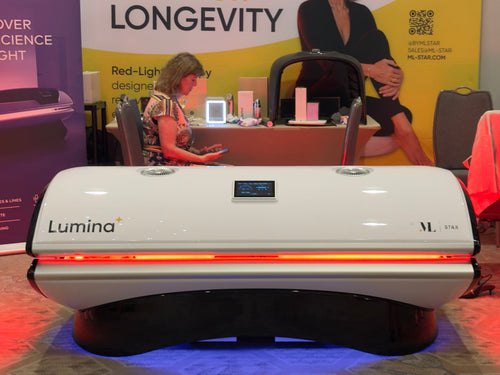
| Lumina | Class II, 510(k)-exempt under product code ILY |
| Antares | Class I, 510(k)-exempt under product code ISA |
| Electra | Class I, 510(k)-exempt under product code ISA |
| Juno | Model KFB291 is included in 510(k) K241857, Class II |
| Maia | ML-Star currently makes no FDA classification, clearance, approval or 510(k)-exempt claim |
Four different regulatory situations across five devices. This is ordinary, and it is precisely why no single FDA statement can be made to cover a brand.
These entries describe regulatory status only. They are not evidence that the devices:
- are more effective;
- are safer;
- guarantee results;
- or have had every technology, wavelength, operating mode or marketing benefit reviewed by the FDA.
A regulatory status describes how a device is regulated. It says nothing about how well that device will work for any individual.
Why Intended Use Matters
The FDA evaluates products based on their intended use.
A device designed for cosmetic applications is evaluated differently from a device intended to diagnose, treat or prevent disease.
This distinction is one reason why product labeling and marketing claims are carefully regulated.
Professionals should always consider how a device is intended to be used rather than assuming all light therapy systems fall into the same category.
Compliance Goes Beyond the FDA
Regulatory quality involves much more than one certification.
Professional manufacturers often maintain additional standards covering areas such as:
- Quality management systems
- Electrical safety
- Manufacturing controls
- Product documentation
- Traceability
These elements contribute to long-term product consistency and professional confidence.
Why Accurate Language Matters
Terms such as FDA approved, FDA cleared and FDA registered are often used incorrectly.
Using accurate terminology helps create realistic expectations while supporting greater transparency throughout the industry.
Professionals deserve information that reflects the actual regulatory framework—not simplified marketing language.
Frequently Asked Questions
Is every red light therapy device FDA approved?
No. Different devices follow different regulatory pathways depending on their intended use and classification.
What is the difference between FDA registration and FDA clearance?
Registration generally refers to the manufacturer or facility, while clearance refers to a specific product reviewed through the FDA's 510(k) process.
Does FDA clearance mean a product is better?
Not necessarily. Regulatory status is one important consideration, but engineering quality, documentation and intended use are also important.
Why do manufacturers use different terminology?
Different regulatory pathways apply to different products. Understanding the terminology helps professionals evaluate products more accurately.
Does 510(k)-exempt mean the same thing as FDA cleared?
No. Exempt means no individual 510(k) submission was required. Cleared means the FDA reviewed a submission and issued a substantial-equivalence determination. They are different statuses and should not be used interchangeably.
Does FDA clearance mean FDA approval?
No. Clearance is a substantial-equivalence determination. Approval refers to a different pathway, such as premarket approval, and involves a different standard of evidence.
Is ML-Star FDA approved?
No. The FDA does not approve, certify or endorse companies or brands, so no manufacturer can accurately claim that status for itself. Regulatory status attaches to individual devices, and ML-Star’s devices carry different statuses from one another. One device, Maia, currently carries no FDA claim at all.
Conclusion
Understanding FDA terminology helps separate regulatory facts from marketing language.
Knowing the difference between registration, clearance and approval allows professionals to make more informed purchasing decisions and evaluate products with greater confidence.
The honest answer to the question in the title is that red light therapy as a category is not FDA approved, and no device should be described that way merely because it emits red light. What can be stated accurately is the status of one specific device, supported by that device’s own documentation.
Regulatory status is also not a performance claim. It describes how a device is regulated — not whether it will work.
Questions about a specific ML-Star device?
Review the Regulatory Status section on the relevant product page or contact ML-Star to request the available product-specific documentation.
REGULATORY DISCLAIMER
This article is provided for general educational and informational purposes only. It does not constitute legal, medical or regulatory advice.
FDA requirements depend on the exact device, intended use, indications for use, technological characteristics, design, labeling, marketing claims and applicable regulations.
Classifications and premarket statuses referenced here reflect ML-Star’s current product-specific documentation as of the review date. They may require reassessment if the product, its intended functionality, labeling, claims or applicable regulatory requirements change.
FDA registration or listing does not constitute FDA approval, clearance, certification or endorsement.